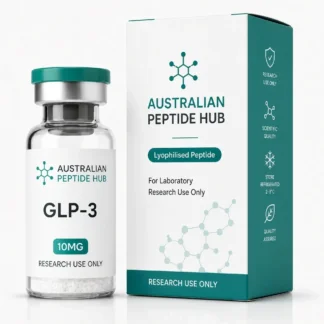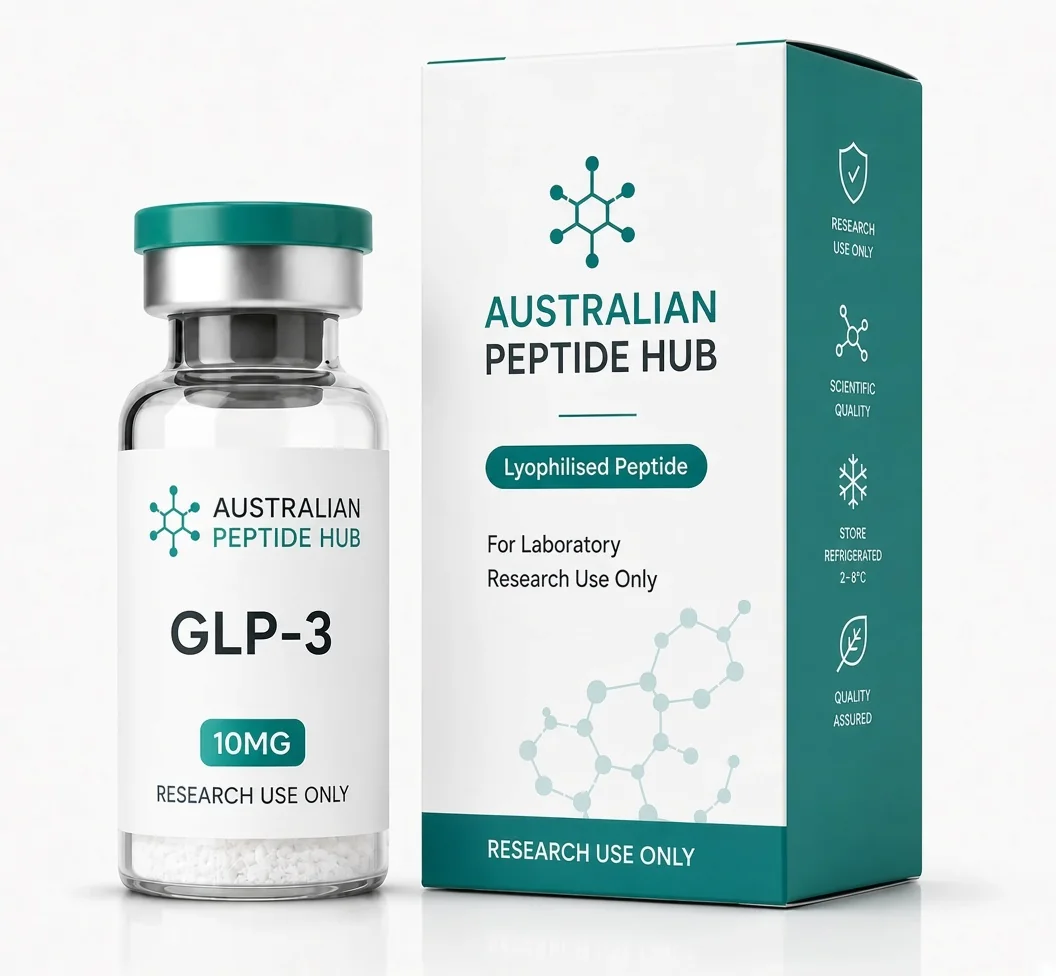
GLP-3R
Price range: $95.00 through $340.00
Processing time is 1–2 business days.
GLP-3R lyophilised research peptide in Australia, supplied for in-vitro laboratory investigation. Each vial contains a sterile lyophilised solid for use in laboratory assay systems. ≥99% purity by HPLC, third-party Certificate of Analysis available. Dispatched within 1-3 business days. Research use only. Not for human consumption, therapeutic use, or diagnostic application.
Lyophilisation & Stability
Each vial is supplied as a sterile lyophilised solid. Lyophilisation removes bulk water while preserving the lipidated peptide in a low-moisture, non-reactive matrix, which is critical for compounds bearing long-chain fatty-acid conjugates that are susceptible to hydrolysis in aqueous solution. Sealed vials remain stable for extended periods when stored cold and protected from light and moisture.
Storage
Store lyophilised vial at 2 to 8°C, protected from light. (Long-term storage at −20°C is standard practice.)
Reconstituted solution: 2 to 8°C, used within 14 to 30 days. Avoid repeated freeze-thaw cycles.
Quality & Documentation
- Purity: ≥99% by HPLC
- Certificate of Analysis (COA): published on our COA page.
Related products
-
Adamax
$75.00 Select options This product has multiple variants. The options may be chosen on the product page -
SS-31
$69.00 Select options This product has multiple variants. The options may be chosen on the product page -
Selank
$50.00 Select options This product has multiple variants. The options may be chosen on the product page